Mice are small, fast and very good at staying out of sight, so the first clue you have a problem is usually the mess they leave behind. Knowing the clear signs of a mouse infestation helps you act quickly, protect your food and reduce health risks.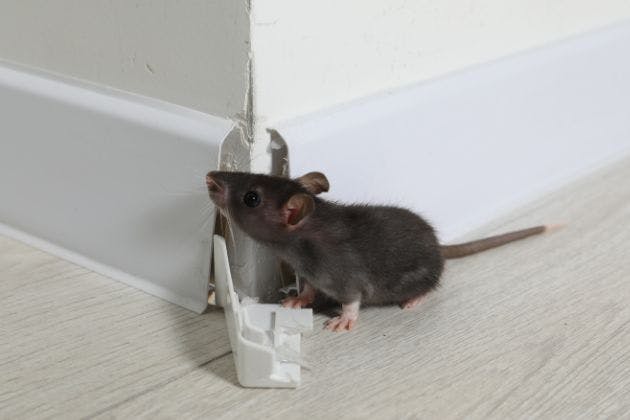
6 signs of mice in your home
Droppings: size and shape vs rats
Mouse droppings are one of the easiest clues to spot. They are very small, dark and pellet-shaped, usually about 3 to 7 mm long, with pointed ends. Fresh droppings look shiny and soft, older ones turn dull and crumbly.
In comparison, rat droppings are larger, around 15 to 20 mm, and look more like big brown grains of rice. If what you are seeing is tiny and scattered in groups, especially along edges or in cupboards, it is more likely mice.
Mouse droppings: 3–7 mm, pointed ends, often scattered or in small clusters
Rat droppings: 15–20 mm, thicker, more like large rice grains
Typical spots: under sinks, inside kitchen units, along skirting, in lofts
Strong urine smell and greasy marks
Mice urinate often and tend to use the same routes repeatedly. Over time, this leaves a strong, acrid smell, especially in enclosed or warm spaces.
You may also notice greasy smears along walls, pipes or gaps where mice brush against surfaces. These come from the natural oils in their fur mixed with dirt.
Scratching and scurrying at night
Mice are most active after dark. Light scratching, rustling or scurrying sounds in walls, ceilings or under floors late at night are a strong warning sign.
In lofts or under floors it can sound like something very large, but often it is only a few small mice moving about, nesting or chewing on materials.
Gnaw marks and damaged food packaging
Mice have to keep their teeth worn down, so they gnaw constantly. In kitchens and pantries, this often shows up as small chew marks on food packets, cardboard boxes or plastic containers.
Look for ripped corners on cereal boxes, nibbled bags of rice or pet food, and tiny holes in plastic tubs. If you can see fine teeth marks about 1 to 2 mm wide, that typically points to mice rather than rats.
Shredded nesting material
Mice like soft, warm nests tucked away out of sight. They tear up paper, kitchen roll, loft insulation, fabric and even bits of carpet to build them.
Finding small piles of shredded material, often mixed with droppings, is a strong indicator that you have an active mouse nest nearby.
Unexpected sightings near food or warmth
If you spot a small, slender rodent with a long thin tail and large ears, especially near the kitchen or boiler, it is probably a mouse. They are usually greyish brown and only 7 to 10 cm long not counting the tail.
Seeing one mouse in the daytime often means there are more hiding nearby, as they prefer to stay out of view unless numbers are building up or food is limited.
Where to check in each part of your home
Once you suspect mice, a careful inspection helps you confirm the problem and gives clues to how they are moving around.
Kitchen and utility room hotspots
The kitchen is usually the first place mice head for, because of the easy food access and warmth. Check along the kickboards at floor level, especially where there are gaps or damaged panels.
Pull out or peer behind fridges, freezers, washing machines and cookers if you can do so safely. Look for droppings, gnaw marks, food spills and damaged insulation on pipes or cables.
Lofts, airing cupboards and under-stairs voids
Lofts are ideal for nesting. Lift insulation carefully and check for tunnels, shredded material and droppings on joists or boards. A strong smell in a confined loft space is often linked to long-term mouse activity.
In airing cupboards and boiler cupboards, look around pipes, shelves and the floor for droppings and gnawing. Under-stairs cupboards and voids are also common routes, especially if they are cluttered or used for storing boxes and fabrics.
Garages, extensions and attached structures
Garages and attached outbuildings often provide an easy path into the rest of the property. Check along the edges of the floor, near stored pet food, bird seed, cardboard boxes and old furniture.
Look for tiny gaps where the garage joins the main house, as well as holes around pipework or cabling runs that lead indoors.
What attracts mice into your property
Understanding what draws mice in helps you cut down future problems. The main drivers are easy food access, shelter and safe travelling routes.
Unsealed food, especially in cardboard or thin plastic, is very appealing. So are open bags of pet food, bird seed, crumbs under cupboards and food left out overnight.
Clutter, stacked boxes and rarely disturbed corners give mice safe hiding places and nesting spots. Outdoors, overgrown areas, dense shrubs and piles of wood next to walls make it easier for them to approach the building without being seen.
Safe clean-up steps if you find droppings
Rodent droppings and urine can carry bacteria, so it is important to clean up safely rather than simply sweeping everything away.
First, ventilate the room by opening windows and doors for at least 15 minutes. Wear disposable gloves and, ideally, a mask. Dampen droppings and contaminated areas with disinfectant or soapy water before wiping them up. Avoid vacuuming droppings as this can spread dust and contaminants.
Dispose of waste carefully in sealed double bags and wash your hands thoroughly afterwards.
Common entry points in Portsmouth and Fareham
In the Portsmouth and Fareham area, mice often enter properties through air bricks, gaps around boilers or pipe penetrations, and via garages.
Check and seal these entry points to help prevent infestations and limit access.
Need help with mouse infestations in Portsmouth and Fareham?
Pegasus offers expert rodent treatment and proofing services to keep your home mouse-free. If you’ve noticed multiple signs of mice, don’t wait—contact us today for a professional inspection and lasting solutions. Learn more about our rodent control and proofing services, or visit our Portsmouth and Fareham pages to get in touch.