Discovering a wasp nest in your loft can be unsettling, particularly if you hear buzzing noises above your bedroom at night. Staying calm and handling the situation safely is crucial. The very first step is to identify whether you are dealing with wasps, bees, or another type of insect before taking any action. This helps you choose the right approach for removal and avoid unnecessary risks.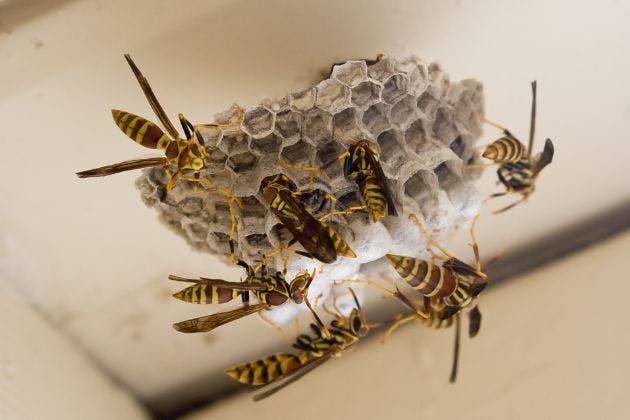
Working out if it is wasps and not bees
Wasps and bees are often mixed up, but they behave differently and are treated in different ways. In many cases, bees are protected and may be relocated rather than treated.
Wasps tend to have a smooth, bright yellow and black body with a narrow waist. Bees are usually rounder, hairier and often a duller yellow or brown. Wasps also move in a faster, more aggressive way compared with the slower, deliberate flight of bees.
The nest itself is another clue. A wasp nest in a loft is usually a light grey or beige ball or dome, made of papery material that looks like layered tissue. Bee colonies are more likely to have waxy combs or clusters of bees rather than a smooth paper shell.
Wasps: smooth, bright yellow and black, papery nest, fast movement
Bees: rounder, hairier, wax comb or clusters, slower and less erratic
Hornets: larger than wasps, more brown and yellow, can be more intimidating
Common signs of a wasp nest in the loft
You do not always see the nest straight away, especially in a dark or cluttered loft. Instead, you might notice more subtle signs in the rooms below or around the roof.
A frequent giveaway is increased wasp activity around the loft hatch, light fittings, extractor fans or gaps in the ceiling. You may see wasps flying in and out of soffits, roof tiles or vents, then disappearing in the same spot.
Inside the loft, a wasp nest will usually look like a grey paper football, although later in summer it can become much larger and more misshapen. A constant buzzing or scratching sound above ceilings, especially on warm days, is another strong indicator of a nest.
Immediate steps to stay safe
Once you suspect or confirm a wasp nest in the loft, your main priority is safety. Wasps can become very defensive if the nest is disturbed, and stings are painful and can trigger allergic reactions.
First, avoid opening the loft hatch unless you absolutely must. Keeping it closed helps contain any wasps that might find their way into the house. Make sure children and pets are kept away from the area until it has been professionally assessed.
Resist the urge to spray shop-bought aerosols into the loft space. Using aerosols near insulation, electrical wiring or hot light fittings is a fire risk, and spraying from the hatch can half-hit the nest and drive angry wasps into your living spaces.
Do not poke the nest with a broom, knock it down or attempt to block every entry point while the nest is active. Trapping wasps inside can make them more aggressive and may push them to find new routes into the house.
Reasons to think twice about DIY treatments
DIY wasp treatments seem simple, but in a confined loft they can quickly get out of hand. Most nests contain hundreds, sometimes thousands, of wasps by mid to late summer, and they react as a group when threatened.
Climbing into a hot, cramped loft with limited visibility and wasps on edge increases your risk of multiple stings. If you lose your footing or panic while up a ladder, you also introduce the risk of falls and injuries.
In addition, over-the-counter products are often less effective than professional treatments. If the queen survives or part of the nest remains untreated, the colony can continue to grow and the problem may simply move deeper into the roof void where it is harder to reach.
How a professional wasp nest treatment works
A professional visit should feel straightforward and controlled. At Pegasus Pest Solutions, a technician will start with a careful inspection of your loft and the outside of the property to confirm it is wasps and to locate the main nest and entry points.
Once identified, a targeted insecticidal treatment is applied directly to the nest or into the entry point. This is usually a dust or liquid formulated for professional use, designed to be carried into the nest by the workers so it reaches the queen.
In most cases, the nest will become inactive within a few hours, although full activity can take up to 24 to 48 hours to cease completely. A reputable technician will advise you on what to expect and whether a follow-up re-check is needed, particularly for larger or awkwardly placed nests.
Before leaving, they should also talk through how the wasps got in, such as gaps around soffits, lifted tiles or unsealed eaves, and suggest practical steps you can take to reduce the risk of future nests.
Local considerations for Portsmouth and Fareham homes
In Portsmouth and Fareham, many properties have older rooflines, loft conversions and complex soffit details that create perfect entry points for wasps. Small gaps where new roofs meet old brickwork or where soffits have warped over time are common issues.
Loft conversions with recessed lighting, roof windows and service voids can also make it easier for wasps to find their way from the roof space into bedrooms or landings. This is why early professional assessment is especially useful in these areas, before the nest grows and spreads further through the roof.
Local technicians who know typical building styles in Portsmouth and Fareham are often quicker at pinpointing likely access routes, which means more effective treatment and better long-term advice.
Frequently asked questions about loft wasp nests
Will they come back?
A treated nest will not be reused by wasps the following year, so once a colony is dealt with, that specific nest is finished. However, new queens can build fresh nests in similar spots if entry gaps remain.
Sealing gaps around soffits and eaves once the nest is inactive, together with checking roof tiles and vents, reduces the chance of future nests choosing your loft.
Do you remove the nest?
In many cases, once a nest has been professionally treated and is inactive, it can safely be left in place. It will dry out and crumble over time and is no longer a risk.
If access is safe and you prefer it gone for peace of mind, your technician can usually remove the dead nest or advise you on when and how it can be removed without hazard.
How quickly can you attend?
During peak wasp season, prompt attention is important, particularly if the nest is close to bedrooms or living spaces. Many professional services can offer same-day or next-day appointments, depending on demand.
When you call, it helps to describe where the activity is, how long you have noticed it and whether anyone in the home has allergies to stings. This allows the technician to prioritise and come prepared.
Next steps if you have a wasp nest in your loft
If you suspect a wasp nest in your loft, keep the hatch closed, keep people and pets away and avoid DIY sprays or attempts to knock the nest down. Professional treatment is the safest and most reliable option.
For friendly, expert help with wasp nests in Portsmouth, Fareham and the surrounding areas, contact Pegasus Pest Solutions on 02393092101 or visit the wasp removal service page. A quick visit from a trained technician can resolve the problem safely and give you clear advice on preventing future nests.