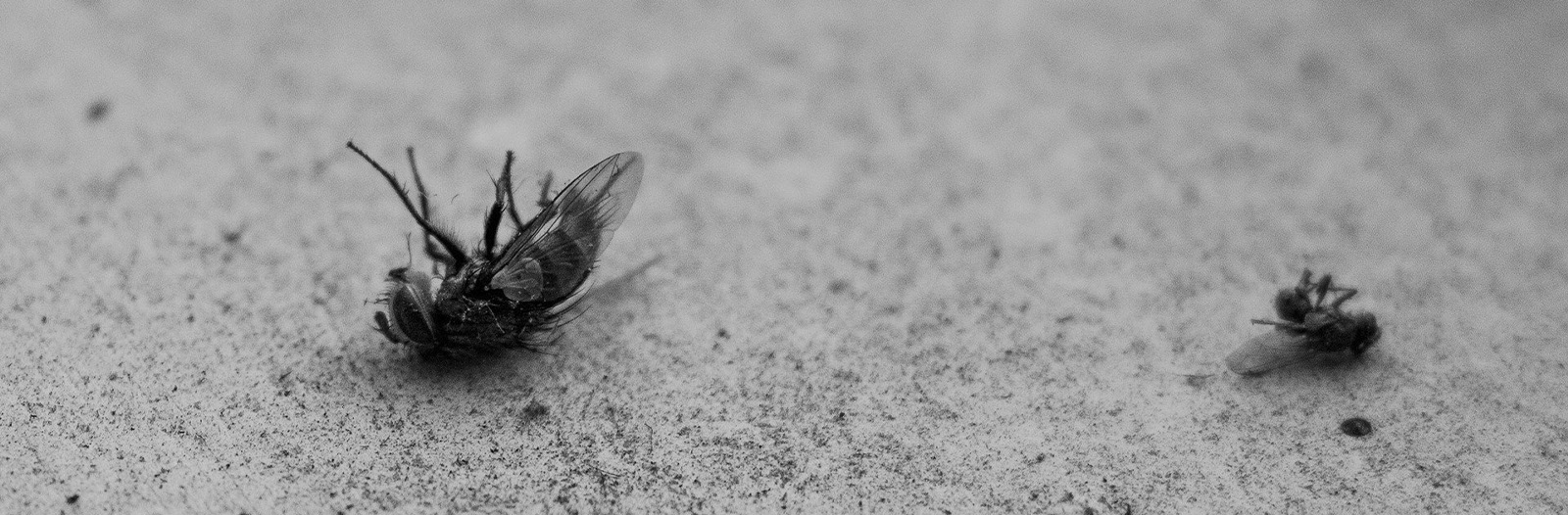
Finding ants in the kitchen can be frustrating, especially when they reappear after you have cleaned the worktops. The most effective solution is not simply removing the ants you can see, but working out where they are entering, what is attracting them and how their scent trail is directing others back inside.
This practical guide explains how to investigate an indoor ant trail safely, deal with common food sources and reduce the chance of reinfestation without putting children or pets at unnecessary risk.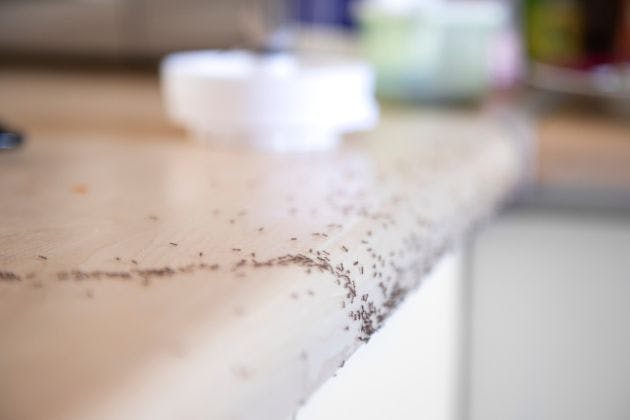
Start by reading the ant trail
Ants often travel in a clear line between food, water and their entry point. Watch the trail for several minutes rather than immediately wiping it away. Look at where the ants disappear, as this may lead to a gap rather than directly to the nest.
Check window frames, the junction between walls and worktops, skirting gaps and cracks around flooring. Also inspect areas where pipes, cables and other utilities pass through cupboards or walls. Ants can use very small openings, particularly around sinks, dishwashers and washing machines where moisture is available.
Follow the route without touching or disturbing the ants, and avoid leaning into cupboards or moving appliances if doing so could damage connections. A quick photograph or note of the route can help you remember the likely entry point after the trail has been cleaned.
Entry points worth checking
Gaps around window frames, doors and skirting boards
Cracks behind or beneath kitchen units
Openings around plumbing, cables and ventilation points
Damaged seals near sinks, dishwashers and appliances
Remove food, moisture and scent signals
Once you have observed the route, clean the area thoroughly. Ants leave a pheromone trail that helps other workers follow the same path, so ordinary wiping may not remove all of the signal. Use warm water with washing-up liquid on hard, washable surfaces, then rinse and dry the area.
For suitable sealed surfaces, a diluted vinegar-and-water solution can help remove greasy or sugary residues, although it should not be used on natural stone, unsealed wood or materials that may be damaged by acid. Always follow the surface manufacturer’s care advice, and never mix cleaning products.
Pay particular attention to sticky patches beneath jars, around fruit bowls, inside food cupboards and along the edge of bins. Empty rubbish regularly, wipe up spills promptly and repair dripping taps or pipework. Store sugar, cereals, pet food and other attractants in sealed containers rather than packets or open bowls.
Common mistakes that keep ants returning
Spraying only the visible ants may give temporary relief, but it does not explain how they are getting indoors or remove the wider trail. It can also cause ants to scatter into other gaps, making the activity harder to trace.
Another frequent mistake is moving food into open containers or leaving crumbs in a cupboard after cleaning the worktop. Ants may also be encouraged by damp cloths, leaking plumbing and food waste that remains in an indoor bin overnight.
Avoid using household chemicals in ways they were not designed for. Do not combine products, apply treatments near food preparation areas without checking the label, or place substances where children and pets can reach them.
Prevent the next trail from forming
After cleaning, seal practical gaps with an appropriate household sealant where safe to do so. Keep seals around windows and doors in good condition, and ask a qualified tradesperson to deal with damaged plumbing or larger structural gaps.
Keep worktops and floors free from residue, dry the sink before bed where possible and store food in airtight containers. If ants return, note the time, location and direction of travel. Repeated activity in the same place can reveal an entry point that was missed during the first inspection.
When ants may indicate a wider issue
A few ants appearing after a warm spell may be an isolated incident, but repeated daily activity deserves closer attention. A trail emerging from a wall, cupboard void, floor gap or service penetration could indicate a nest in a cavity or an established route into the property.
Contact a pest professional if activity continues despite removing food sources and cleaning trails, if ants are appearing in several rooms, or if you cannot safely access the suspected entry point. Extra care is advisable in homes with young children, pets, allergies or vulnerable occupants.
When to call a professional
Arrange an inspection if:
Ants are present every day or keep returning after cleaning
The trail disappears into a wall, floor, appliance space or cupboard void
There are several trails or activity in more than one room
You are unsure how to use DIY products safely around family or pets
A professional visit typically begins with an inspection of the activity, likely entry points, food and moisture sources, and accessible voids. The technician can then recommend a targeted treatment approach, explain any preparation or safety requirements, and provide prevention advice to reduce the risk of reinfestation. You can also find practical answers in our general pest control FAQs or learn more about our pest control services.
Stop the cycle at its source
Kitchen ants are easier to manage when you treat the trail as evidence rather than simply a nuisance. Trace where it leads, remove the scent and food signals, check likely entry points and monitor whether activity returns.
If ants continue to appear, Pegasus Pest Solutions can help identify the cause and recommend a suitable solution. Call 07501702101 to book an inspection and take the next step towards a kitchen that stays ant-free.